Choosing Summer Thermostat Settings in New Orleans
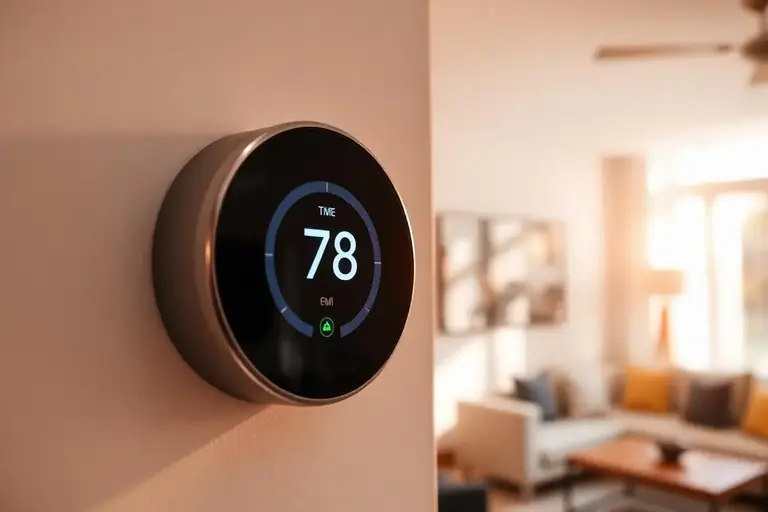
The right summer thermostat setting is the one your system can hold steadily through the hottest part of the day without running nonstop. A commonly cited reference point is 78°F while you're home and awake, but humidity, duct condition, and your system's capacity all shape whether that number actually works in your house.
A Starting Point for Summer Settings
The U.S. Department of Energy commonly references these starting points, though the right setting for your home depends on how your system performs:
- Home and awake: around 78°F is a common starting point
- Sleeping: a few degrees warmer than daytime, often paired with a ceiling fan
- Away from home: a moderate setback, rather than turning the system off entirely
Important: avoid turning the AC off completely when you leave, even for a few days. In New Orleans, indoor humidity can rise quickly, creating conditions that favor mold growth in ductwork and throughout the home.
Why a Moderate Setting Often Works Best
At a moderate setting, an AC system cycles on and off in longer, steadier runs rather than short-cycling or running continuously. Setting the thermostat far lower does not cool the home any faster — it only makes the system run longer, which increases wear and energy use without a proportional comfort benefit.
Humidity: The Factor Temperature Alone Misses
In Southeast Louisiana, outdoor humidity is often very high during the cooling season. An AC system does two jobs — cooling the air and removing moisture — and the thermostat setting affects both:
- Setting the thermostat too high can mean the AC doesn't run long enough to dehumidify, leaving the home feeling damp even at a moderate temperature
- Setting it very low can cause short-cycling, which cools the air quickly but doesn't remove much moisture
- A steadier setting tends to let the system run in longer cycles that more effectively reduce humidity
If a home feels humid despite the AC running, possible causes include a dirty air filter, an oversized system, or a mechanical issue that needs a technician to confirm.
Using a Smart or Programmable Thermostat
A Wi-Fi-enabled smart thermostat can hold a schedule automatically, which removes the temptation to make frequent manual adjustments. We install and configure smart thermostats as part of our services — ask about options during a service visit.
Common Thermostat Habits Worth Reconsidering
- Cranking it down when you get home — the system doesn't cool any faster, and it's easy to forget to raise it back later.
- Turning the AC off entirely when you leave — in New Orleans this invites humidity buildup and makes the system work harder to recover.
- Frequent manual overrides — every override interrupts the schedule and reduces consistency.
- Running the fan continuously instead of "AUTO" — this can recirculate humidity back into the home after the compressor cycles off.
- Placing the thermostat in direct sun or near a vent — this causes false readings and short-cycling; relocation may help.
When the Thermostat Isn't the Real Problem
If you've tried a reasonable setting and comfort still isn't right, the cause may be elsewhere:
- A clogged air filter restricting airflow
- Leaky ductwork losing conditioned air, which a duct camera inspection can help identify
- A system that's aging and losing performance — see signs it may be time to replace
- Refrigerant or airflow issues behind an AC that freezes up
Our maintenance plan includes two seasonal tune-ups a year, which can catch issues like these before they turn into an unscheduled repair.
Considering a Thermostat Upgrade?
We install and configure smart thermostats across the Greater New Orleans area.
Frequently Asked Questions
HVAC Service Areas
Keeping It Cool Heating & Air proudly serves homeowners throughout the Greater New Orleans area:
Related Articles
Related Services
Need help from a Greater New Orleans HVAC pro? Explore the services most relevant to this article:
Your Next Steps
- Lower runtime with a maintenance visit
Airflow, refrigerant, and coil checks that make setpoints hold.
- Emergency HVAC FAQs — what counts as urgent
When to call after hours versus waiting for a regular appointment.
- Maintenance plan FAQs — what's covered and how often
Visit frequency, included tasks, and plan tiers explained.
- Request a written, no-pressure quote
Tell us what is happening and we will put the scope in writing.