
Spring AC Tune-Up Checklist for New Orleans Homes
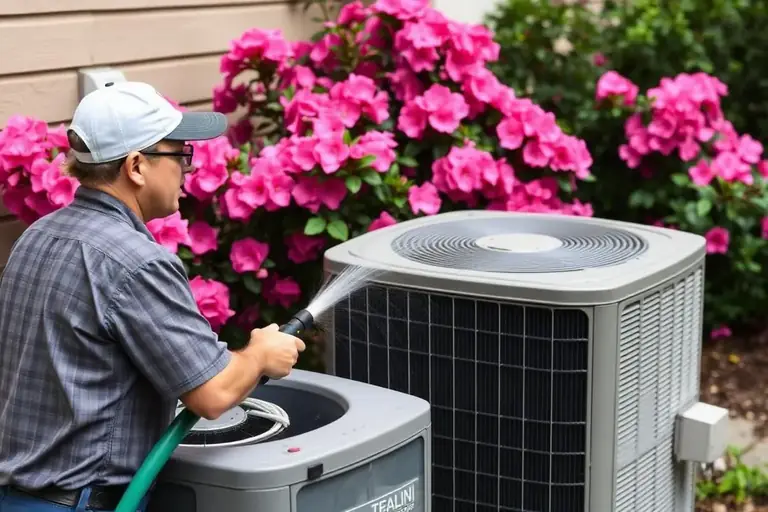
Getting cooling equipment ready before the first hot stretch means covering two lists: what a homeowner can safely check, and what needs a technician's tools and training. Here's both, plus a few things that tend to get missed in this climate specifically.
Homeowner Checklist
- Replace the air filter. Start the season with a fresh filter sized correctly for your system.
- Clear the outdoor unit. Rake leaves, pull weeds, and trim back vegetation to give the unit room to breathe.
- Rinse the condenser coil. Shut the system off at the thermostat first, then rinse the fins gently from the inside out with a garden hose — never a pressure washer.
- Flush the condensate drain. Pour a cup of distilled white vinegar down the access point near the air handler.
- Test the thermostat. Fresh batteries if needed, set to cooling mode, and confirm the system responds.
- Walk each room. Feel for airflow at the registers and note any that seem weak or warm.
- Check for water stains near the air handler or in the attic, which can point to a drainage issue.
What a Technician Checks
- Refrigerant pressure and operating check
- Capacitor condition test
- Contactor inspection for pitting
- Amp draw on the compressor and blower motor
- Electrical connections tightened
- Deep coil cleaning if needed
- Evaporator coil and condensate pan inspection
- Safety float switch test
- Refrigerant line insulation check
- Temperature split verification
- Thermostat calibration
None of these should be attempted without training — capacitors can hold a charge even with the power off, and refrigerant handling legally requires an EPA-certified technician.
Local Items That Get Missed
- Clogged weep hole in the drain pan from algae growth, common in a long humid cooling season
- Degraded refrigerant line insulation from sun exposure, which can affect efficiency and lead to condensation issues
- Corroded outdoor disconnect on homes closer to the lake or coast, from salt and moisture exposure
Timing the Visit
Scheduling early in spring, before the first sustained hot stretch, generally means more flexibility on appointment timing than waiting until the rush of calls that follows the season's first heat wave.
Request Your Spring Tune-Up
Serving New Orleans, Metairie, Kenner, Slidell and the Northshore.
Frequently Asked Questions
HVAC Service Areas
Keeping It Cool Heating & Air proudly serves homeowners throughout the Greater New Orleans area:
Related Articles
Related Services
Need help from a Greater New Orleans HVAC pro? Explore the services most relevant to this article:
Your Next Steps
- Join a twice-yearly maintenance plan
Two seasonal tune-ups and a repair discount on the membership plan.
- Maintenance plan FAQs — what's covered and how often
Visit frequency, included tasks, and plan tiers explained.
- Emergency HVAC FAQs — what counts as urgent
When to call after hours versus waiting for a regular appointment.
- Request a written, no-pressure quote
Tell us what is happening and we will put the scope in writing.