
Duct Repair, Sealing & Installation
Leaky, damaged, or poorly connected ductwork wastes energy, creates hot and cold spots, and forces your HVAC system to work harder than it should. We inspect it, and repair or replace what we find.
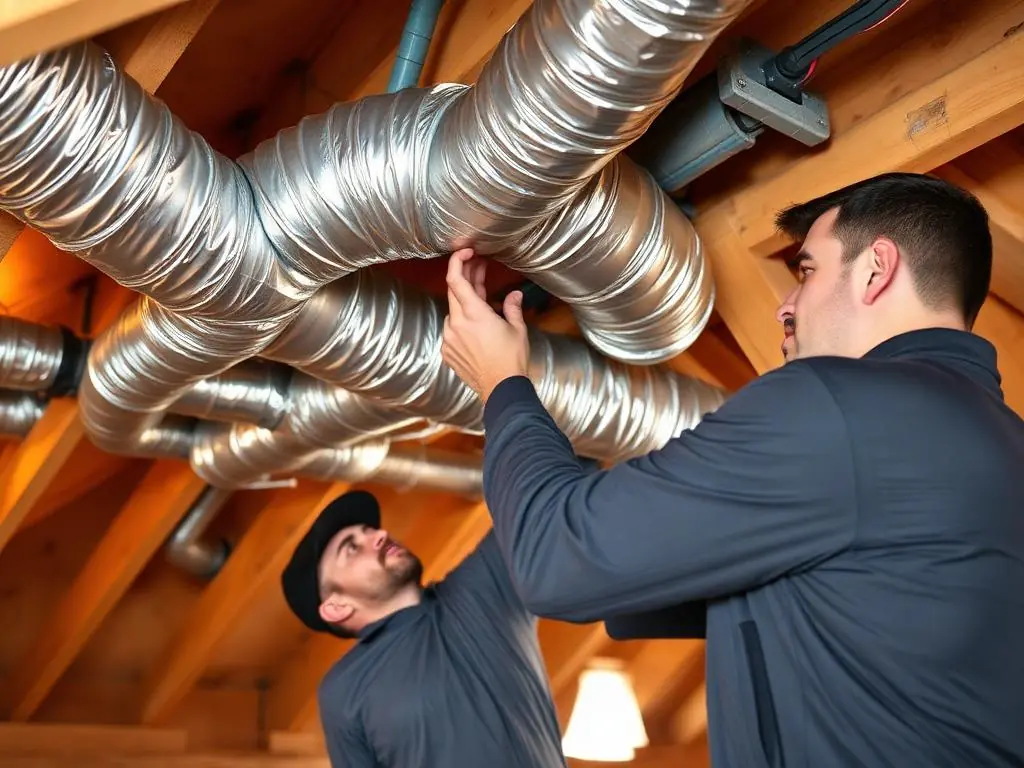
What We Offer
Homes commonly lose a meaningful share of conditioned air through leaky or poorly connected ductwork — air you paid to cool or heat that never reaches your living spaces. Our duct repair and sealing services target that waste by restoring proper airflow, improving comfort room to room, and reducing wasted runtime. Whether it's a single disconnected joint in the attic or a complete ductwork replacement during a renovation, our team evaluates the system first and explains what it found before any work is approved.
Duct sealing is done by hand, at the joints, boots, and plenum connections where conditioned air actually escapes. We use mastic sealant and UL-listed materials at accessible connections, re-support sagging runs, and repair or replace insulation that has slumped or torn. How much improvement is possible depends on how much of the duct system is accessible and what condition it is in — something we can only tell you after an inspection.
For homes with severely damaged, crushed, or undersized ductwork, repair may not be the right answer. We design and install new duct systems using industry-standard materials, sizing calculations, and code-compliant techniques. New ductwork is often the better path during major renovations, room additions, or when moving to a system with different airflow requirements than the old one.
Signs your ducts may need attention include rooms that won't cool or heat properly, excessive dust even after cleaning, whistling or rattling noises from vents, visible gaps or disconnections in accessible ductwork, and energy bills that seem higher than they should be. A professional duct inspection identifies where the problems are and what it will take to correct them.
What to Expect
Duct System Inspection
We access your attic, crawlspace, or wherever your ducts run to visually inspect for damage, disconnections, crushed sections, and deterioration, and to evaluate airflow at problem registers.
Findings & Pricing for Approval
We explain exactly what we found — leaks, damage, sizing issues — and provide pricing for the recommended repair, sealing, or replacement work before anything begins.
Professional Repair or Installation
Our technicians perform the approved work using appropriate materials: mastic sealant at joints, UL-listed tape for connections, code-compliant supports, and correctly sized duct runs.
Airflow Verification
After the work is complete, we check airflow at registers to confirm delivery has improved in the areas that were falling short.
Why Ductwork Is the Weak Point in Local Homes
Most comfort complaints we investigate in the metro are duct problems wearing an equipment costume. The housing stock explains why.
Ducts live in the hottest, most humid space in the house
In the majority of local homes the trunk and branch runs sit in an unconditioned attic. A leak on the supply side dumps conditioned air into the attic; a leak on the return side pulls superheated, dusty attic air into the system. Both raise your bill and drop comfort at the register.
Humid air plus cold metal equals condensation
Where duct insulation has slumped, torn, or been compressed by storage boxes, the outside of the duct sweats. Over time that shows up as stained ceilings, damp insulation, and the conditions that encourage microbial growth.
Raised-pier and crawlspace runs
Older Uptown, Mid-City, and Bywater homes often route flex duct under the floor, where it gets crushed, disconnected, chewed by pests, or soaked after heavy rain. A single kinked or disconnected run is enough to make one room unusable in August.
Undersized returns in older houses
Many homes were built with a single small return for the whole house. Starve the return and the whole system suffers: low airflow, frozen coils, noisy vents, and rooms that never balance no matter how new the equipment is.
Renovations that outgrew the duct system
Additions, enclosed porches, and converted attics get tied into a duct system that was never sized for them. The fix is design work, not a bigger unit.
What a Duct Evaluation Covers
- Visual inspection of accessible attic, crawlspace, and closet runs
- Disconnected, crushed, kinked, or sagging sections
- Joint, boot, and plenum sealing condition
- Duct insulation condition and signs of condensation
- Return air sizing and filter grille restriction
- Static pressure and airflow at problem registers
- Supply and return balance room by room
- Duct sizing against the equipment's rated airflow
- Signs of pest intrusion, water damage, or microbial growth
Duct Repair vs. Cleaning vs. Replacement
These are different services with different outcomes — this page covers repair, sealing, and installation.
Stop paying to cool air that never reaches your rooms. Keeping It Cool Heating & Air provides expert duct repair, sealing, and installation across Kenner, Metairie, New Orleans, and the Greater New Orleans metro — with upfront pricing and no hidden fees.
Frequently Asked Questions
How do I know if my ducts are leaking?
Common signs include rooms that are hard to cool or heat, excessive dust throughout the house, higher-than-expected energy bills, and visible gaps or tape peeling off duct joints in your attic or crawlspace. An inspection of the accessible duct runs, along with airflow checks at the registers, shows where the losses are.
How much does duct sealing or duct repair cost?
It depends on what the inspection finds: how much of the duct system is accessible, how many connections need attention, whether sections are crushed or disconnected, the materials required, and the overall scope of the work. We inspect first, explain what we found, and provide pricing for your approval before any work begins.
Can you install new ductwork in an older home?
Yes. We design and install new duct systems for older homes, renovations, and additions. We work around existing structures — joists, wiring, plumbing — to route ductwork efficiently and minimize disruption. Proper sizing helps the system deliver the right amount of air to each room.
Should I repair or replace my ductwork?
If the problems are limited to a few connections or sections, repair is usually the sensible option. If the ductwork is extensively damaged, undersized for the equipment it serves, or badly deteriorated throughout, replacement may deliver better long-term results. The recommendation depends on what we find during the evaluation.
Will sealing my ducts lower my energy bills?
Sealing leaks and correcting damaged runs reduces the amount of conditioned air lost before it reaches your rooms, which generally helps efficiency and comfort. The size of the change depends on how leaky the system was to begin with, how much of it is accessible, and how your home is used — so we describe what we expect to improve rather than promising a specific number.
How long does duct repair or replacement take?
It varies with the size of the home, how accessible the ductwork is, and how much needs to be corrected. We give you a time estimate along with pricing once the inspection is complete.
From Our Blog
Need This Service?
Contact us today for a free estimate. We serve Kenner, Metairie, New Orleans, Pearl River & surrounding areas.