HVAC Maintenance Tips for Gulf Coast Conditions
Maintenance advice written for a national audience assumes a shorter cooling season, drier air and no storm season. Along the Gulf Coast, equipment runs for most of the year in sustained humidity, and homes closer to Lake Pontchartrain deal with coastal air on top of that. This guide explains which local conditions actually drive wear and which upkeep habits respond to them. If you want the same material organised by month, see our year-round maintenance checklist.
The Conditions That Drive Local Wear
Four things separate a Greater New Orleans system from one in a milder climate, and each points to a specific habit.
- Run hours. Cooling season stretches across most of the year, so components accumulate wear faster than a maintenance schedule built around a short summer expects.
- Humidity. Removing moisture is a large part of the job here. That keeps the evaporator coil and drain pan wet for months, which is why biological growth and drain restrictions are so common locally.
- Coastal air. Homes near the lake accumulate residue on outdoor coil fins that traps grime and holds moisture against the metal.
- Storm season. Heavy rain, debris and power interruptions concentrate between June and November and create failure modes that have nothing to do with normal wear.
Drainage Is the Local Priority
Of everything a homeowner can influence, the condensate path matters most in this climate. A system dehumidifying for months produces a continuous volume of water, and that water has to leave the house reliably. When it does not, the result is a safety-switch shutdown on a hot afternoon, or water finding a ceiling.
- Confirm the line is actually discharging, especially during humid stretches and after heavy rain
- Flush the line periodically with distilled white vinegar rather than bleach
- Keep the discharge point clear of mulch, soil and debris
- Treat water near the indoor unit or a stain on the ceiling below it as a reason to call, not to watch
Persistent musty odours that survive a filter change and a clean drain usually point at the duct system rather than the equipment; our duct services page covers inspection and sealing, and indoor air quality covers the humidity and filtration side.
Outdoor Unit Habits
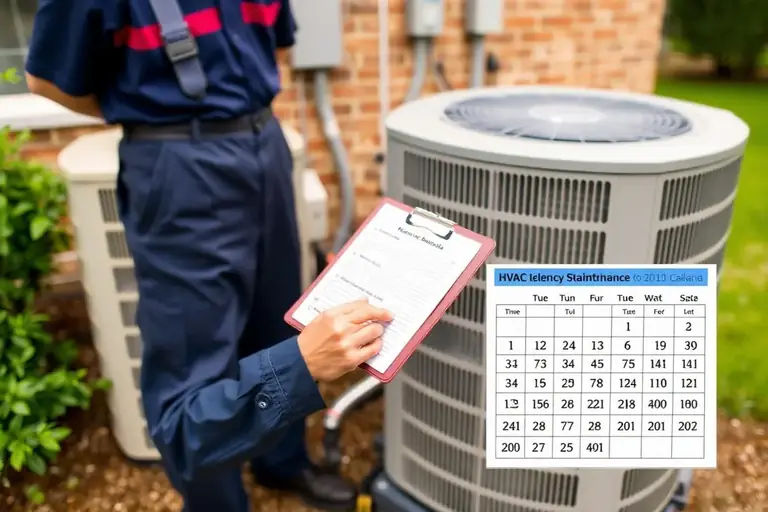
The outdoor unit rejects heat, and anything that blocks airflow across it makes the whole system work harder. Coastal exposure makes this more of an ongoing task here than inland.
- Keep roughly two feet of clearance on all sides and clear grass clippings after mowing
- Cut power at the disconnect before rinsing, then spray the fins gently with a garden hose — never a pressure washer, which flattens fins permanently
- Rinse more often if you are close to the lake or a heavily wooded lot
- Do not stack storage, planters or covers against the cabinet during cooling season
Filters and Airflow
Filter intervals here depend on filter depth, household conditions and how many hours the system runs, not on a fixed calendar date. Check monthly and change when the media looks loaded. A restricted filter reduces airflow across the coil, which shows up as weak cooling, longer run times, or ice on the refrigerant line. Our guide on filter intervals walks through the factors. Also confirm supply and return vents stay unobstructed — furniture over a return is a surprisingly common cause of comfort complaints.
Storm Season Adjustments
- Before a storm: turn the thermostat off and cut the outdoor disconnect. Skip solid tarps, which trap moisture against the cabinet.
- During: leave the system off. Unstable voltage during and after an outage is hard on electrical components.
- After: look for standing water at the outdoor unit and at the air handler before restoring power. If either was submerged, leave it off and have it inspected — energising water-damaged equipment is unsafe.
Full storm guidance is in our hurricane preparedness guide, and emergency HVAC service covers after-hours failures.
What Belongs to a Licensed Technician
- Refrigerant handling, which is federally regulated and requires certification
- Electrical component testing — capacitors can hold a charge after power is removed
- Combustion and heat exchanger inspection on gas equipment
- Airflow and static pressure measurement, and duct sealing
- Documented annual service, which many manufacturer warranties expect
If cooling performance has already dropped off, start with AC repair rather than more homeowner upkeep — sustained poor performance usually reflects a measurable fault.
Ready to schedule seasonal service?
Our membership plan is $199 annually or $19.99 monthly and includes two seasonal tune-ups, a 10% repair discount, no after-hours fee and a $100 credit toward a system replacement.
Frequently Asked Questions
HVAC Service Areas
Keeping It Cool Heating & Air proudly serves homeowners throughout the Greater New Orleans area:
Related Articles
Related Services
Need help from a Greater New Orleans HVAC pro? Explore the services most relevant to this article:
Your Next Steps
- Join a twice-yearly maintenance plan
Two seasonal tune-ups and a repair discount on the membership plan.
- Maintenance plan FAQs — what's covered and how often
Visit frequency, included tasks, and plan tiers explained.
- Emergency HVAC FAQs — what counts as urgent
When to call after hours versus waiting for a regular appointment.
- Request a written, no-pressure quote
Tell us what is happening and we will put the scope in writing.