
Turning Down the Thermostat Won't Fix a Warm House
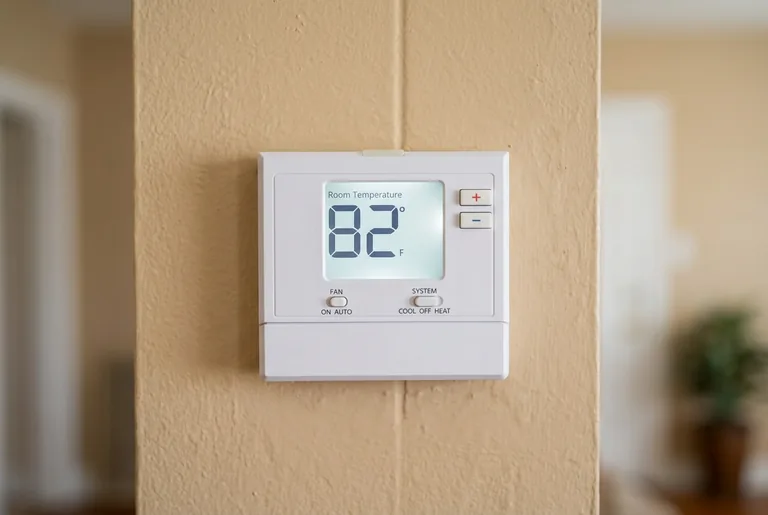
When the house feels hot, the instinct is to walk over to the thermostat and push the setting down several degrees — sometimes all the way into the 60s. It feels like taking action. But if your system is already struggling, a lower number on the wall does not solve the problem, and in a New Orleans summer it can quietly make things worse.
Why a Lower Setting Doesn't Cool Faster
Most residential air conditioners are single-speed machines: when they run, they produce cold air at one fixed rate. The thermostat is a switch, not a throttle. Setting it to 65°F instead of 75°F does not make the air coming out of the vents any colder — it only tells the system to keep running until the house reaches 65°F.
If your home is at 82°F and your system is healthy, it will reach a reasonable setpoint at the same speed whether you ask for 76°F or 68°F. The only difference is how long the system runs before it shuts off — and how easy it is to forget the setting and pay to overcool the house.
What Cranking It Down Actually Does
- Longer, harder runtime — the system works against a target it may never reach on a hot afternoon, adding wear without added comfort.
- Higher energy use — every extra degree of cooling costs money, and an unreachable setpoint means the system never gets to rest.
- Frozen coils on a struggling system — if airflow or refrigerant is already marginal, nonstop runtime can ice the coil over. Then instead of a warm house, you have no cooling at all.
- A hidden diagnosis — the lower setting masks the symptom instead of addressing why the system fell behind in the first place.
When the House Stays Warm No Matter the Setting
If you have set the thermostat lower and lower and the indoor temperature barely moves, the thermostat is telling you something: the problem is in the equipment or the home. The usual suspects in Greater New Orleans homes are:
- A clogged air filter choking airflow
- Low refrigerant from a slow leak reducing capacity
- Leaky or damaged ductwork dumping cold air into the attic
- An aging system that has lost the capacity it once had
- Extreme attic heat gain overwhelming an otherwise working system — see why your AC runs all day
If your AC is running but not cooling, that guide walks through the safe checks you can make before scheduling a repair.
What to Do Instead of Pushing the Setting Down
- Set a realistic target — around 78°F is a common starting point; pick the number your system can actually hold and leave it there.
- Keep the fan on AUTO — continuous fan can push moisture off the coil back into the house between cycles.
- Check the filter — it is the one fix a homeowner can make in five minutes.
- Block the heat — close blinds on sun-facing windows and run ceiling fans so a higher setting still feels comfortable.
- Call before it fails — a system that cannot hold a reasonable setting is asking for attention; catching it early beats an emergency call on the hottest weekend of the year.
Our maintenance plan includes two seasonal tune-ups a year, which is when weak capacitors, dirty coils and marginal refrigerant charge usually show up — before they become a warm house.
Free Download: Warm House Troubleshooting Checklist
Every safe check from this article on one printable page — thermostat, airflow, equipment and home — plus the warning signs that mean it's time to call.
Free Download: Seasonal AC Maintenance Schedule
A printable month-by-month schedule for Gulf Coast homes — what to check every month, and what to do each spring, summer, fall and winter to stay ahead of the heat.
Thermostat Down, House Still Warm?
We diagnose cooling problems across the Greater New Orleans area — airflow, refrigerant, ductwork and equipment, measured on site.
Frequently Asked Questions
HVAC Service Areas
Keeping It Cool Heating & Air proudly serves homeowners throughout the Greater New Orleans area:
Related Articles
AC Running But Not Cooling
The safe checks to make at home before calling a technician.
Read moreWhat Actually Drives AC Repair Cost in New Orleans
What goes into a repair bill and what to expect in 2026.
Read moreHVAC Maintenance Tips for Gulf Coast Conditions
Keeping a coastal-climate system healthy between tune-ups.
Read moreHow Routine Maintenance Protects AC Efficiency
Why a maintained system holds temperature instead of falling behind.
Read moreRelated Services
Need help from a Greater New Orleans HVAC pro? Explore the services most relevant to this article:
Your Next Steps
- Book AC repair in Greater New Orleans
Diagnosis and repair for weak cooling, freeze-ups, and short cycling.
- Book a seasonal HVAC tune-up
Prepare the system before the next Louisiana heat wave or cold snap.
- AC repair FAQs — what we check and how a visit works
Answers to the questions homeowners ask before scheduling a repair.
- Emergency HVAC FAQs — what counts as urgent
When to call after hours versus waiting for a regular appointment.