Category
AC Repair
Troubleshooting guides and fixes for common air conditioning problems in the Greater New Orleans area.
Most AC calls in Greater New Orleans start the same way: the system is running, the house is not getting comfortable, and it is hard to tell whether the problem is small or serious. This category exists to help you describe what you are seeing accurately, rule out the handful of things a homeowner can safely check, and recognise the situations where the equipment should be shut off rather than left running.


A Symptom Is Not a Diagnosis
"The AC is not cooling" is a symptom. A restricted filter, a dirty condenser coil, a failed capacitor, a blocked condensate drain, a refrigerant leak and a duct problem can all produce it, and several of them can be present at once. Articles that promise a single cause behind a single symptom are usually oversimplifying.
That distinction matters practically. A confirmed diagnosis comes from measurements taken on site — temperature split across the coil, static pressure, electrical readings, refrigerant behaviour under real conditions — not from a description over the phone. What a good description does is help the visit start in the right place, which is why the guides here focus on observation rather than conclusions.
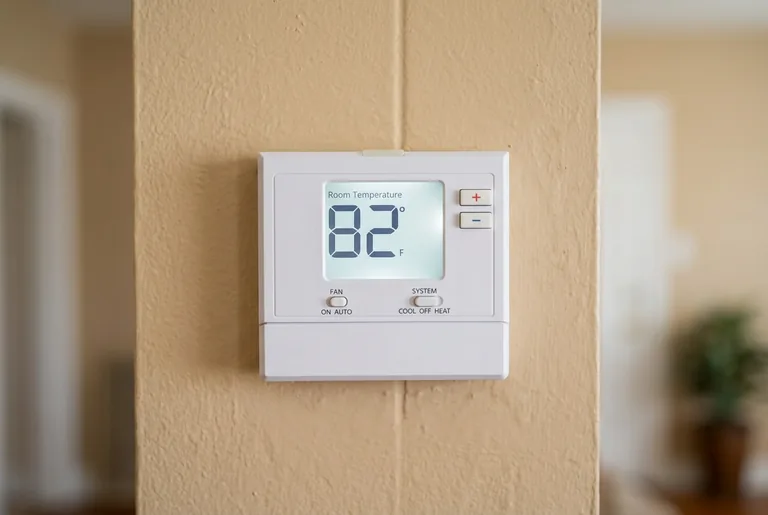
When you call, the details that help most are simple: what the thermostat is set to versus what the room reads, whether the outdoor unit is running, whether air is coming from the vents, when it started, and whether anything changed recently such as a storm, a power interruption or a filter change.
- Air is moving but it is not cold — often airflow, charge or coil condition
- Nothing runs at all — often power, control or a safety switch that has tripped
- The system runs constantly and never satisfies the thermostat — load, duct or capacity related
- Short cycling on and off — control, electrical or airflow related
- Ice on the line or coil — airflow or refrigerant related, and the system should be shut off
Checks a Homeowner Can Safely Make
There is a short list of things worth checking before a technician is dispatched, and all of them can be done without opening an electrical panel or removing an access cover on energised equipment.
If none of these resolve the problem, stop there. Refrigerant handling, capacitor testing and any work inside an energised unit require training, tools and licensing — those are not homeowner tasks, and attempting them risks injury and further damage.
- Confirm the thermostat is set to cool, the setpoint is below room temperature and the batteries are good
- Look at the air filter and replace it if it is visibly loaded
- Check that supply and return vents are open and unobstructed
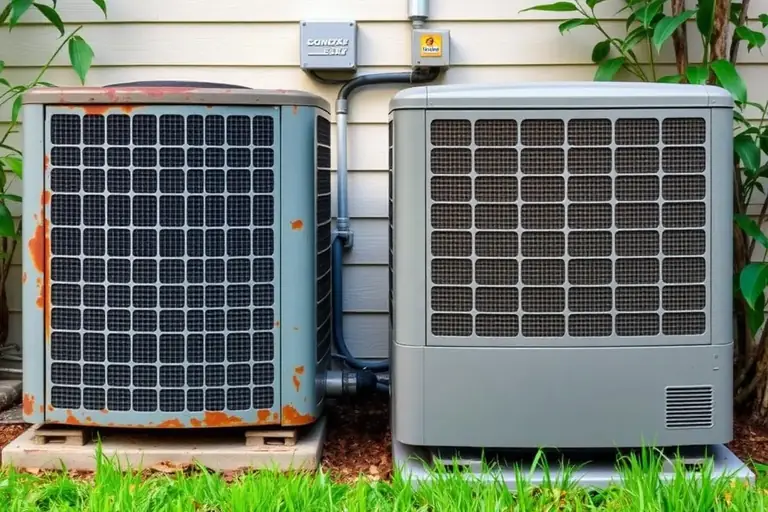
- Clear leaves, grass clippings and vegetation away from the outdoor unit so it has free airflow
- Check whether a breaker has tripped, and reset it once — if it trips again, leave it off and call
- Note the exact behaviour and timing so it can be described accurately
When to Shut the System Off
Some symptoms mean the right action is to turn the system off and leave it off until it has been looked at. Continuing to run equipment in these conditions can turn a contained repair into a larger one, and a few of them are safety issues rather than comfort issues.
In those situations, switch the thermostat to off, and if the breaker is accessible and clearly labelled, turn it off as well. Then call. Our emergency HVAC page explains how after-hours requests are handled and what information to have ready.
- Burning smells, hot electrical odours, smoke or visible scorching — shut off and call immediately
- Ice visible on the refrigerant line or indoor coil — running it longer can damage the compressor
- Water standing around the air handler or dripping through a ceiling
- Loud grinding, screeching or repeated hard clunking from the outdoor unit
- A breaker that trips again immediately after being reset
- Any flooding of outdoor equipment after a storm surge or heavy rain event
Cooling and Humidity Problems Specific to the Gulf Coast
Equipment here works under conditions much of the country never sees: a cooling season that runs most of the year, dew points in the seventies for months at a time, attic temperatures well above outdoor temperatures, salt and moisture near the lake and the Northshore, and storm exposure every summer and autumn.
That changes which failures are common. Condensate systems move far more water here than in a dry climate, so drain blockages and overflow switches are a routine cause of a system that suddenly stops. Attic-mounted air handlers and long duct runs through hot, humid attics lose capacity and pull in moist air wherever they leak. Long runtime accelerates wear on capacitors, contactors and blower motors. And a system that cools but leaves the house feeling clammy is frequently an oversizing or airflow issue rather than a broken part.
It is also why humidity deserves its own attention. A house at 76°F and 50% relative humidity is more comfortable than the same house at 73°F and 65%. When indoor humidity stays high while the system runs, that points toward runtime, airflow, duct leakage or sizing rather than a simple component failure.
How These Articles Help Before a Service Visit
The guides in this category are organised around the three things homeowners actually need: troubleshooting language, a sense of urgency, and preparation. Troubleshooting articles walk through what a given symptom typically indicates and what has to be measured to confirm it. Urgency articles help separate a failure that should be handled now from one that can wait for a scheduled appointment. Preparation articles cover what to have ready — access to the equipment, a clear description of the symptom, and any history of previous repairs.
None of them replace an on-site diagnosis, and none of them should be used to price a repair in advance. Cost depends on the specific part, the access to the equipment, refrigerant type and system age, which is why written estimates come after the diagnosis rather than before it.
For background on how a repair visit itself works, the AC repair service page covers the diagnostic process. If you need the equipment looked at in one of our core markets, the New Orleans, Metairie and Kenner AC repair pages describe what is typical in each of those areas.
Scheduling and Availability
We do not publish guaranteed response windows, because honest scheduling depends on current availability, how many calls are already open and where they are. During a heat wave or after a storm, demand across the metro rises sharply and appointment times move accordingly.
What we can do is tell you plainly what is available when you call. Phone (504) 762-0331 with your address and a description of the symptom, and you will get a realistic answer for that day rather than a promise made in advance.
AC Repair Questions From Greater New Orleans Homeowners
General questions about the repair process itself. The articles below cover individual symptoms in more depth.
What is the difference between an AC symptom and a diagnosis?
A symptom is what you observe — warm air, ice on the line, a system that will not start. A diagnosis identifies the cause, and it comes from measurements taken on the equipment: temperature split, static pressure, electrical readings and refrigerant behaviour. Several different causes can produce the same symptom, so a diagnosis cannot be made reliably over the phone.
Which AC checks can I safely do myself?
Confirm the thermostat mode and setpoint, replace a visibly dirty filter, make sure vents are open, clear debris away from the outdoor unit, and check whether a breaker has tripped. Anything that involves opening an energised cabinet, testing capacitors or touching refrigerant lines requires training and licensing and should be left to a technician.
When should I turn my AC off instead of waiting for a technician?
Shut the system down if you smell burning or hot electrical odours, see ice on the refrigerant line or coil, find standing water at the air handler, hear grinding or screeching from the outdoor unit, or a breaker trips again right after being reset. In those cases continuing to run the equipment usually makes the damage worse.
Why does my house feel humid even though the AC is cooling?
Cooling and dehumidification are related but not the same. A system that is oversized, short-cycling, or moving air too quickly across the coil can hit the temperature setpoint while removing very little moisture. Duct leakage in a hot attic adds humid air on the return side. All of these are common in Gulf Coast homes and are diagnosed by looking at runtime and airflow rather than by replacing a part.
Why do condensate problems cause so many local breakdowns?
A long, humid cooling season means an air handler here removes a great deal of water every day. Drain lines slime up, traps clog, and the float switch does exactly what it is designed to do and shuts the system off before water damages the ceiling. It is a frequent reason a system stops with no other warning sign.
What information should I have ready when I call for a repair?
The address, what the thermostat is set to versus what the room reads, whether the outdoor unit is running, whether any air is coming from the vents, when the problem started, anything unusual that preceded it such as a storm or power interruption, and any repairs done in the last couple of years. Clear access to the indoor and outdoor equipment also shortens the visit.
How quickly can someone come out?
That depends on current availability rather than a fixed promise. Call (504) 762-0331 and we will tell you what is genuinely open for your address that day. Demand across the metro rises during heat waves and after storms, so the honest answer changes day to day.
Your Next Steps
Ready for help from a local team? Start here, or call (504) 762-0331.