
Category
Ductwork
How your ducts affect comfort, air quality, and energy bills — plus when cleaning, sealing, or replacement is worth it.
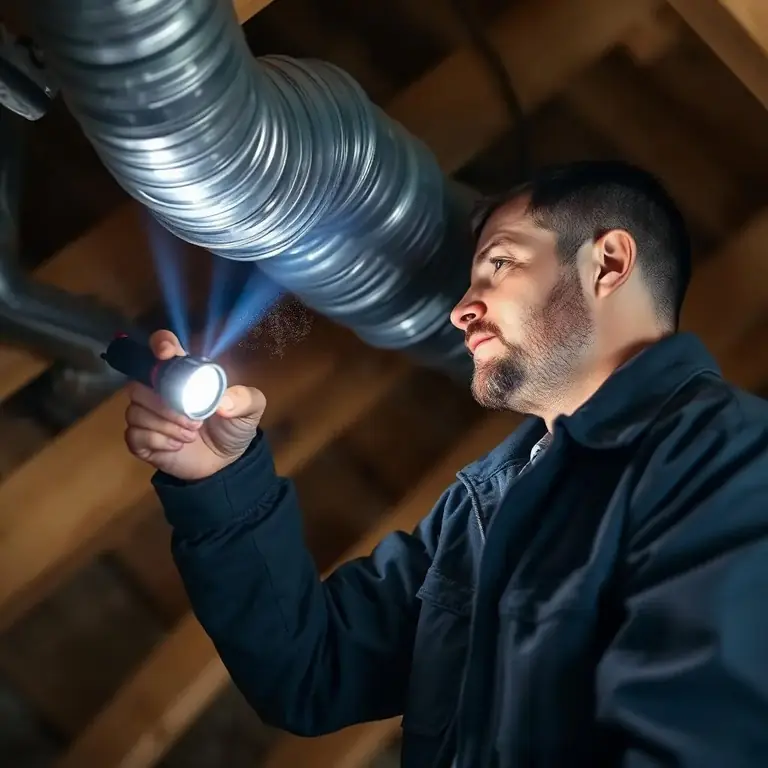
In Greater New Orleans, ductwork is usually the difference between a system that keeps up in August and one that runs all day without ever feeling cool. Most of the homes we service in Kenner, Metairie, and Uptown have ducts in unconditioned attics or crawl spaces, where 100°F-plus summer temperatures and heavy humidity punish every seam, every strap, and every inch of insulation.
Why Ductwork Matters More in Southeast Louisiana
Duct losses are not evenly distributed across the country. A leaky duct in a mild, dry climate wastes energy. A leaky duct in a New Orleans attic pulls in air that is both blistering hot and saturated with moisture, then pushes that load through your air handler for the rest of the day. The result is a system that technically works but never satisfies the thermostat, plus indoor humidity that stays high enough to feel clammy at 74°F.
Older Jefferson and Orleans Parish homes tend to show one of three duct patterns: original metal trunk lines wrapped in aging insulation, 1980s-era flex runs that have sagged and kinked over decades, or a mixed system where additions were tied into a trunk that was never resized. Each of those creates a different comfort complaint, and each has a different fix — which is why guessing at ductwork rarely works.
The articles in this category walk through what we actually find when we open up a return chase or drop a camera into a supply run, and how to tell whether cleaning, sealing, insulating, or replacing is the right next step for your house.
- Rooms that are 5–10°F warmer than the rest of the house, usually at the end of a long run
- A system that runs constantly in July but never drops below 78°F
- Dust that returns within days of cleaning, pointing to unsealed returns pulling attic air
- Musty smells at start-up, a sign of moisture inside the duct or at the plenum
- Utility bills that climbed without a change in habits or thermostat settings
Cleaning, Sealing, Inspection, and Replacement — What's Different
Duct cleaning removes accumulated debris, construction dust, and biological growth from the interior surfaces of your supply and return runs. It is the right call after a renovation, after water intrusion, or when you can visibly see buildup at the registers. What cleaning does not do is fix airflow or leakage.
Sealing addresses the leaks themselves — at plenum connections, boot penetrations into ceilings, and joints that have separated as the mastic dried out. Sealing is what recovers lost capacity and reduces the humid attic air being pulled into the return side of the system.
A camera inspection is the diagnostic step in between. Instead of assuming, we document interior condition, crushed sections, disconnected boots, and insulation damage so you can see exactly what you are paying to fix. On homes older than about 25 years, an inspection frequently changes the recommendation from cleaning to partial replacement.
Replacement makes sense when insulation is compromised throughout, when runs are undersized for the equipment, or when repeated repairs have already been made. A properly sized, sealed, and insulated duct system is often the single highest-return HVAC investment in an older Louisiana home — sometimes more impactful than upgrading the equipment itself.
What Good Duct Work Looks Like Here
Local building conditions shape best practice. In our service area we look for duct insulation rated for hot, humid attics; supports spaced closely enough that flex runs do not sag into standing loops; sealed boots where ducts pass through ceiling drywall; and adequate return capacity so the blower is not starved. Return sizing is the most commonly skipped item, and it quietly limits performance on otherwise well-installed systems.
We also pay attention to elevation-driven realities. Homes raised on piers put ducts in a vented crawl space where moisture and animals both cause damage. Slab-on-grade homes typically push everything into the attic. The correct approach differs, and any contractor recommending the same fix for both is not accounting for your house.
Ductwork FAQs for New Orleans Homeowners
Common questions we hear on duct calls across Kenner, Metairie, New Orleans, and the surrounding parishes.
How do I know if my ducts are leaking?
The clearest signs are rooms that never reach the thermostat setting, indoor humidity that stays high even while the system runs, dust that reappears quickly after cleaning, and utility bills rising without a change in usage. A technician can confirm leakage with a visual inspection of the plenum and boots, plus a camera pass through the runs.
Is duct cleaning worth it in a humid climate like New Orleans?
It is worth it when there is a specific reason: visible debris, post-renovation dust, water intrusion, or biological growth. Cleaning alone will not fix airflow problems or high energy bills. If your complaint is comfort or cost rather than dust and odor, sealing and insulation usually deliver more.
How often should ducts be inspected?
Every three to five years for most homes, and sooner after any roof leak, storm damage, major renovation, or equipment replacement. Attic ducts in Southeast Louisiana age faster than the national average because of sustained heat and humidity.
Should I replace ductwork at the same time as my AC?
Often, yes. New equipment is sized and staged around a specific airflow target. If the existing ducts are undersized, leaking, or poorly insulated, a new high-efficiency system will not deliver the comfort or the savings it was rated for. Replacing both together also avoids paying twice for access and labor.
Can leaky ducts cause mold in my home?
They can contribute. Leaks on the return side pull humid attic or crawl-space air into the system, raising indoor moisture. Combined with cool surfaces and dust, that creates conditions where growth becomes possible. Correcting leakage and controlling indoor humidity are the practical preventive steps.
How long does duct sealing or replacement take?
Targeted sealing on an average single-family home is typically a one-day job. Full duct replacement usually runs one to three days depending on square footage, attic access, and how many runs need to be rebuilt.
Your Next Steps
Ready for help from a local team? Start here, or call (504) 762-0331.