Category
Indoor Air Quality
Mold, humidity, allergens, and VOCs — how to breathe easier in Southeast Louisiana's climate.
Indoor air quality in Southeast Louisiana is really a humidity story first. When outdoor dew points sit in the 70s for months at a time, moisture is the driver behind mold, dust mites, musty odors, and that heavy feeling in a house that is technically at 74°F. Filtration and purification matter, but they work best after moisture is under control.
Humidity Is the Local Root Cause
Comfortable indoor relative humidity sits roughly between 40% and 55%. Many New Orleans-area homes run well above that for much of the year, especially in shoulder seasons when the outdoor temperature is mild but the air is still saturated. In those conditions the AC does not run long enough to dehumidify, so moisture accumulates even though the thermostat is satisfied.
That single dynamic explains most of the air-quality calls we take: musty closets, condensation on supply registers, allergy symptoms that worsen indoors, and air that smells stale after the house has been closed up. Oversized equipment makes it worse, because short cycles cool quickly and remove very little water.
The guides in this category cover how to measure indoor humidity honestly, what a healthy range looks like for a Gulf Coast home, and where dehumidification, ventilation, filtration, and duct sealing each fit.
- Windows or vents sweating during humid stretches
- Musty odor when the air handler first starts
- Allergy or asthma symptoms that improve when you leave the house
- Wood floors cupping or doors sticking seasonally
- Visible growth on register faces, closet walls, or behind furniture on exterior walls
Filtration, Purification, and What Each Actually Does
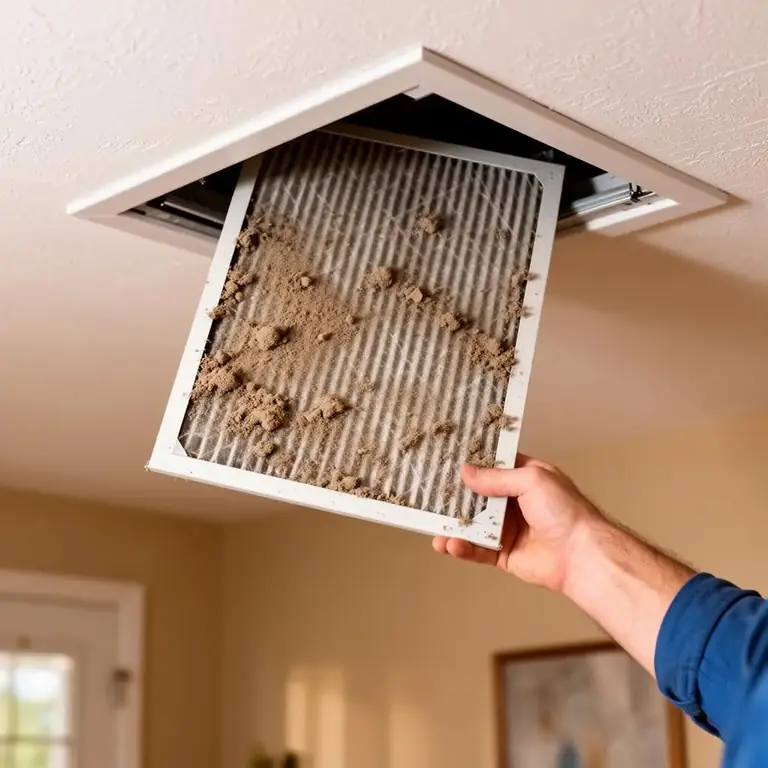
Media filtration captures particulates: dust, dander, pollen, and a portion of mold spores. A deeper media cabinet generally outperforms a thin one-inch filter without starving the blower, which matters because over-restrictive filters cause their own problems in older duct systems.
UV and photocatalytic products target biological growth on coil and drain-pan surfaces, where standing moisture makes growth most likely. They are a coil-hygiene measure more than a whole-house air treatment, and they are most useful on systems that already show recurring growth.
Ventilation addresses stale air and accumulated VOCs from finishes, cleaners, and combustion appliances. In a tightly built newer home, controlled fresh-air intake is a genuine improvement. In a leaky older home, air sealing and duct sealing usually come first, because uncontrolled infiltration is already bringing in humid outdoor air.
Whole-home dehumidification is the tool that changes the most in this climate. It runs independently of cooling demand, which means it keeps moisture in range during mild, damp weather when the AC barely cycles.
A Practical Order of Operations
We generally recommend homeowners work in this sequence: measure indoor humidity in more than one room, correct duct leakage and return sizing so the system is not importing attic air, verify the AC is properly sized and dehumidifying during normal runtime, then add filtration or dehumidification to close the remaining gap. Skipping to a purifier before addressing moisture and duct leakage tends to disappoint.
Health-related claims deserve care. We describe what equipment does mechanically — capturing particles, reducing moisture, exchanging air — and leave medical guidance to your physician. If a household member has asthma or a diagnosed sensitivity, coordinating with their doctor about targets is worthwhile.
Indoor Air Quality FAQs for Gulf Coast Homes
What homeowners across the metro ask most about humidity, filtration, and air quality.
What indoor humidity level should I target in New Orleans?
Aim for 40–55% relative humidity. Above roughly 60%, conditions favor mold and dust mites and the air feels clammy even at a comfortable temperature. An inexpensive hygrometer in two or three rooms gives you a realistic picture.
Why does my house feel humid when the AC is running?
Usually one of three reasons: the system is oversized and short-cycles before removing much moisture, the ducts are pulling humid attic air into the return, or the coil and airflow are not matched. Each has a different fix, so diagnosis matters more than adding equipment.
Do I need a whole-home dehumidifier?
It is the most effective option when humidity stays high during mild weather, when the home has a raised crawl space, or when a properly sized AC still cannot hold 55%. If your problem only appears in peak summer, correcting airflow and duct leakage may be enough.
How often should I change my air filter here?
Every 30–60 days for a one-inch filter, and every 6–12 months for a deep media cabinet, depending on pets, dust, and how many months the system runs. In this climate systems run most of the year, so err toward the shorter interval.
Are UV lights worth adding to my system?
They are most useful for keeping the evaporator coil and drain pan clean on systems that have already had recurring growth. They are not a substitute for filtration, humidity control, or duct sealing.
Can my HVAC system remove mold smells?
It can reduce odors caused by growth on the coil or in the drain pan once those surfaces are cleaned and kept dry. If the smell is coming from wet building materials or a duct that has taken on water, that source has to be corrected — no filter will mask it long-term.
Your Next Steps
Ready for help from a local team? Start here, or call (504) 762-0331.